Teen patti tips
If you want the mistake list written as mistakes, use the teen patti tips page.
Read the noteTeen patti strategy for a first night is a stop number written before the boot, a rule for when you look, and a refusal to chase a loss. It is not a machine that prints wins. If the chips are real cash, you need to be 18 or older.
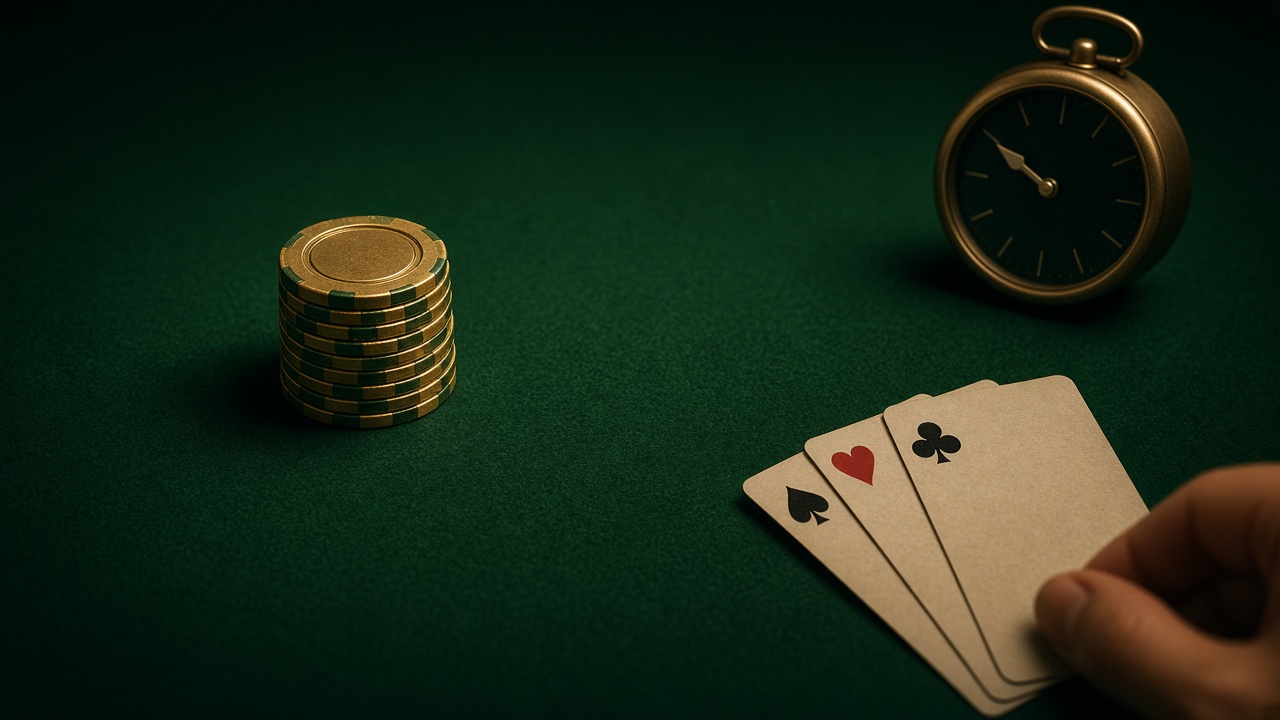
Put the number where you can see it. When that figure is gone, the seat is gone, even if the last pot felt unfinished. Memorise the number before you memorise a story about nerve.
Friends want a chart that says hold this and raise that. There is no teen patti strategy that turns three random ranks into a wage. You can fold well and still finish down. The job of a limit is to make "down" a number you chose, not a hole you discover at midnight.
This page is an independent guide. It is not the app publisher, not a casino, and it cannot return chips or reset a sign-in. If the tile you joined disagrees with a sentence here, the tile wins. Muflis, a joker room, and AK47 wear a familiar felt and play a different contract. Read the name before you post the opening stake.
A later write-up can walk each rank as its own decision. This one stops earlier on purpose, so it does not pretend to be that piece. A beginner teen patti strategy has four jobs: cap the money, choose when to look, refuse to chase, and notice who still has to act. Mixing a full rank-by-rank script in here would pretend a king-high has one correct price on every table. It does not. The boot, the number of players, and the tile all move the price.
Trail, pure sequence, sequence, colour, pair, high card. Ace high except ace-two-three. Suits do not rank in a classic tie. The ladder names the holding. It does not price the next raise.
The opening stake is the boot. Everyone puts the same amount in to receive a three-card holding. You do not negotiate it halfway through the deal. If that amount is already a bite out of the stop number, you are at the wrong table. A calm teen patti strategy picks the boot before it picks a seat.
Say the stop number once, out loud if you are alone. Then divide it by the boot. A stop of 100 and a boot of 5 is twenty opening stakes, and fewer than that once raises start. If you cannot name the count, you do not have a limit. You have a mood. Moods raise. Numbers leave.
Set the stop, then sit. That order is the teen patti strategy most people skip, because the lobby is brighter than a notebook. The boot has to fit under the number with room for several lost deals. A table whose minimum is half your night is one hand with a logo.
After the deal the three stay face down. You may play them without looking, at the cheaper price, or look and pay the seen price, usually double. Looking is a purchase. You cannot unsee the ranks and crawl back to the cheap button.
A patient teen patti strategy pays that double only when the information can change a decision you are actually willing to make. If you were going to call blind for two more rounds anyway, an early look just taxes you. If a raise is about to become a real slice of the stop number, looking tells you whether to fold a rag or stay with a pair.
Try it with prices. Blind call 10, seen call 20. You peek and find king of hearts, ten of hearts, and a four of clubs. Two hearts are not colour. Colour needs three of one suit, in a row or not, and a run of one suit is a pure sequence, which is a different hand. This holding is high card, and a thin one. Paying 20 to learn that, then folding, is the expensive tour of a hand you could have left face down. A teen patti strategy that peeks from curiosity donates the gap between 10 and 20.
Stay face down while the pot is still close to the boot. Look when the next call would spend money you would hate to put on king-ten-four. Five curious looks, each wasting an extra 10, are 50. Against a stop of 80, that is most of the night.
You lost a pot. The next shuffle does not know that. Raising because the last hand lost is how a stop number dies in four orbits.
Chasing is the failure this page is here to interrupt. Teen patti strategy does not raise the stake to get even. After a lost pot, post the same boot or leave the chair. If your hands feel hot, that heat is not a report on the next three ranks. Stand up for ten minutes. The table will still exist. So will the money you did not throw after it.
The player who "just needs one hand" is describing a chase. A teen patti strategy you can repeat tomorrow refuses that sentence. You already had a hand. It lost. A bigger boot "while you are running bad" is the same leak in a cleaner shirt.
You are not always last to speak. Two players may still sit after you, both able to raise. Your king-high has to survive them. Calling rents a problem you have not seen.
Position means the players still to act after you. With two of them left, a bare king is usually a fold once the seen price is more than a shrug. Teen patti strategy at a full table is mostly that count. The ranks matter. The queue behind you matters as much, because each of those players can make the next number ugly.
Last to speak, with everyone on a minimum call, a small pair can stay. First to speak, with the seen price already a chunk of the stop number, the same pair can go. The ranks did not change. The crowd behind you did. Count the lit seats after yours before you call.
Five players. Boot of 2. Stop number 80. You are third to act and the player before you raised. Seen to continue is 8, face down is 4. You look, because king-high should not pay 8 blind. You find king of spades, queen of diamonds, seven of clubs. High card. Two players still to act. You fold.
That fold is the lesson. Teen patti strategy on this page is not a script that says raise aces and slow a trail. A trail is the best classic hand, three of a kind, and you will not see one often. Playing as if every king is on the way to a trail is how 80 becomes zero while you narrate bad luck.
Hand strength is the ladder rank of what you hold, from trail down to high card, and it is not how much you like the suits. A teen patti strategy that plays every king-high because the king is a picture will fund everyone else's boot. Queen-jack-nine in mixed suits is a sequence and it beats that king.
Bluffing is a performance with a weak holding, and night one can skip the performance. The seen price is already a tax. Adding theatre on top of king-ten-four is a second tax. Leave, and let someone else pay to discover you had little. A beginner teen patti strategy is allowed to be dull. Dull keeps the stop number intact. Exciting is how people describe the session they then have to explain.
The figure you wrote down is your bankroll for this sitting. When it hits zero, teen patti strategy says the sitting is over. Not over after this one. Over. Borrowing, moving rent money, or jumping to a bigger boot to win it back are the same mistake in cleaner clothes. A practice table with play chips is a place to learn the buttons. It is not a receipt you can cash.
People type 3 patti strategy and mean this same three-card game. The shorter label does not invent a new ladder or a kinder boot. Teen patti gameplay at beginner level is boot, look, and fold, repeated without a raise born from anger. If you want the mistake list written as mistakes, use the teen patti tips page. Counts for a trail and a sequence live on the probability page, and you can set a stop number without those counts in your head.
Anyone selling a guaranteed line is selling a story. You can fold the hands this page names and still lose the 80, because the deals are shuffled. The result you can actually control is that you stopped. A marketed teen patti strategy with a win rate attached is advertising. Close it.
Real cash is 18+. If you are under that, do not sit, do not borrow a relative's number, and do not treat practice mode as a back door. Set a clock beside the stop number. When the alarm goes, finish the hand you already paid for and do not start another. The responsible gaming notes are the longer form of that clock.
Deal yourself ten three-card hands from a physical deck. Say whether you would look if the seen price were already double, and whether you would call with two players still behind you. You will want to play too many bare kings. Ten deals like that are enough teen patti strategy before you spend the number.
No. A stop number caps a loss. It does not deliver the next pot. You can play the four jobs and finish the session down.
When the information can change a call you would hate to make face down. Looking from itch doubles the price on most tables and you cannot take the look back.
No. This page is the limit, the look, the refusal to chase, and the count of players still to act. A page that prices each rank is a different job.
Then the classic ladder is the wrong map. In Muflis the worst classic hand takes the pot. Read the tile before you post. House text wins when it disagrees with this guide.
Take teen patti strategy in this order. Write the number. Choose a boot that fits under it. Look only when the price can change a real fold. After a loss, stay at that boot or stand up. Count the players who still have a turn. Then stop when the number or the clock says stop. The pot you wanted back is not a fifth rule.
Teen patti tips are the brakes. A 3 patti strategy that ignores the tile is a classic plan played on a reversed table. Teen patti gameplay still starts with the number you wrote down.
18+ where the table is real-cash. Play inside a stop number you can lose. This guide does not run the game and cannot return chips.
If you want the mistake list written as mistakes, use the teen patti tips page.
Read the noteCounts for a trail and a sequence live on the probability page, and you can set a stop number without those counts in your head.
Read the note