Teen patti cards ranking
The teen patti cards ranking page is for a single rank against another rank.
Read the noteA teen patti sequence is three ranks in a row, and the suit is a separate question. Ace-two-three is the low run. Queen-king-ace is the high run. One suit makes it pure. Real-cash play is 18+.
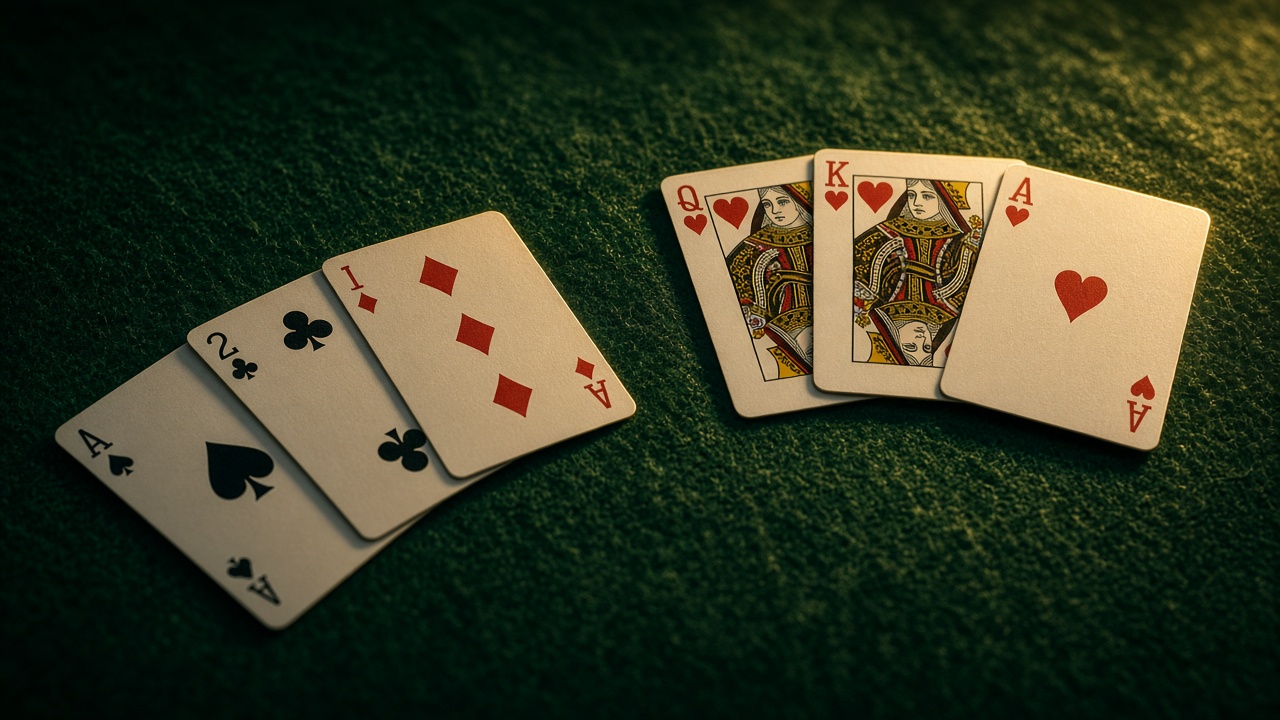
Lay the ace of spades, the two of hearts, and the three of clubs in front of you. Someone at the table will call the ace high and treat this as the best run on the felt. They are wrong. Learn the teen patti sequence before you argue about a pretty colour or a loud ace. This page is an independent guide. It does not run the app, hold a balance, or return chips. If the tile prints a different ace rule, the tile wins.
Ace-two-three is the low teen patti sequence. The ace sits under the two, the way a wheel sits under a four in other card games. It is still three in a row. It is not rubbish. It loses to two-three-four, to seven-eight-nine, and to queen-king-ace. It does not lose its name.
Queen-king-ace is the high teen patti sequence. Here the ace sits above the king. Queen of hearts, king of spades, ace of clubs beats jack-queen-king of any suits. It also beats ace-two-three. The same ace cannot be high and low in one three-card hand. You do not hold ace-king-two and call it a run. King and two do not touch. The gap kills it.
Count on your fingers if the middle card is the argument. Four, five, six touches. Four, five, seven does not. Jack, queen, king touches. Jack, queen, ace does not. The teen patti cards ranking page is for a single rank against another rank. A run is three ranks that touch. Do not borrow the single-card page to invent a wrap from king to two.
In pure sequence teen patti, pure means the three cards are one suit. Queen, king, ace of hearts is the picture people remember. Four, five, six of clubs is the same shelf with smaller ranks. Ace, two, three of diamonds is that shelf at the bottom of the runs. Mixed queen-king-ace loses to it. The ranks look embarrassed. The shelf does not care.
A same-suit hand that skips a rank is not pure and not a run. Ace, king, jack of spades is one suit and one gap. It is a colour. Some tiles print that shelf as color. It loses to four, five, six of mixed suits. It beats two kings. People stare at the three spades and pay anyway.
A pair is two cards of the same rank plus a spare, and every run beats it. High card means nothing matched and nothing touched: queen, jack, nine of mixed suits is the usual lump, and it loses to two sixes with a four. You do not need those shelves to recognise a run. You need them so you stop promoting a colour into one.
The teen patti sequence order puts a same-suit run above a mixed run, and both of them below three of a kind. A teen patti sequence does not beat a trail. Three twos beat ace-king-queen of hearts. Say that with the cards on the table. If it still feels rude, you are importing a ladder from a different game. The six shelves put three of a kind on top for the classic tile. This page only explains the run shelves under that top.
Name a teen patti sequence out loud before you call it a colour. Four of spades, five of hearts, six of clubs: mixed run. Four, five, six of hearts: same-suit run. The hearts win on the shelf, not on a story about red cards. Two mixed four-five-six hands, different suits, split in a classic game. Hearts against clubs does not crown a winner when both runs are mixed and the ranks match.
Two same-suit runs with the same ranks also split. Queen-king-ace of hearts against queen-king-ace of spades is not a suit fight. The tie card on the tile is the only extra rule, and some rooms simply chop the middle. Read it before the comparison, not after you have lost the argument.
A broken teen patti sequence, with a rank skipped, falls off the run shelves. Nine, ten, queen is the example that fools a fast table because the cards look close. They are not in a row. If they share a suit, you have a colour. If they do not, you have unmatched cards. Neither one beats four-five-six.
King, ace, two is the other trap. The ace can be low beside a two and a three. It can be high beside a king and a queen. It cannot bridge king and two in three cards. There is no rank between king and ace, and there is a cliff between ace and two when the ace is trying to be high. Pick one job for the ace. The hand you were dealt already picked it.
Spread ten three-card groups from a physical deck. For each group, answer three questions. Do the ranks touch? If an ace is present, is it beside a two or beside a king? Do the suits match? Touching ranks with mixed suits is the lower run. Touching ranks with one suit is the higher run. A gap is not a run, however handsome the suit is.
Put queen of diamonds, king of clubs, and ace of hearts on the left. Put ace of clubs, two of diamonds, and three of spades on the right. The left hand wins. Change only the right hand so all three clubs show ace, two, three. The right hand wins, because one suit jumped a shelf while the left hand stayed mixed. Swap the left hand for three queens. Three queens take the middle. The pictures did not get worse. They met a higher shelf. Do this once with a friend who keeps calling the wheel the boss of the table.
Then set the low run and the high run beside three twos. Ace-two-three of diamonds loses to the twos. Queen-king-ace of hearts loses to the twos. The drill is dull on purpose. The pot you save is the one where you raise a beautiful run into three queens because the queens look plain.
Real-cash tables are 18+ only. A correct read of a run is not a promise of profit. This guide will not hand you a mod, unlimited chips, or a way past the age check. The coins stay on the operator's account. Knowing ace-two-three is low does not pull a lost call back out of the middle.
Yes. It is the lowest run. The ace sits under the two. Two-three-four beats it. It still beats any colour and any two of a rank.
Yes. In queen-king-ace the ace is high. The same three-card hand cannot use the ace as both ends at once.
No. Three of a kind is the shelf above every run. Three twos beat ace-king-queen in one suit.
No. Matching ranks on the same shelf split, unless the tile's house card says otherwise. One suit matters when it moves you up a shelf, not as a tie-break inside a shelf.
Keep the teen patti sequence as two pictures, not one slogan. Ace-two-three is small. Queen-king-ace is large. One suit lifts the picture to the higher run shelf. It does not lift it over three of a kind.
If you remember one line about a teen patti sequence, remember that queen-king-ace is high and ace-two-three is low. Check the tile before you teach the table. A room that moves the ace is announcing a house rule, and the house rule outranks this page.
The teen patti cards ranking page is the face line. This page is only the run, and the run still loses to three of a kind.
18+ only where money is real. Stake what you can leave behind. This guide does not operate the table.
The teen patti cards ranking page is for a single rank against another rank.
Read the noteThe six shelves put three of a kind on top for the classic tile.
Read the note