Six categories
The six categories are written out with one example each.
Read the noteTeen patti card ranking, for a single face, runs from the top face down to the two, and the top face plays low only inside A-2-3. That is not the shape ladder. Hand strength is the six categories, three of a kind on the roof. Real-cash tables are 18+.
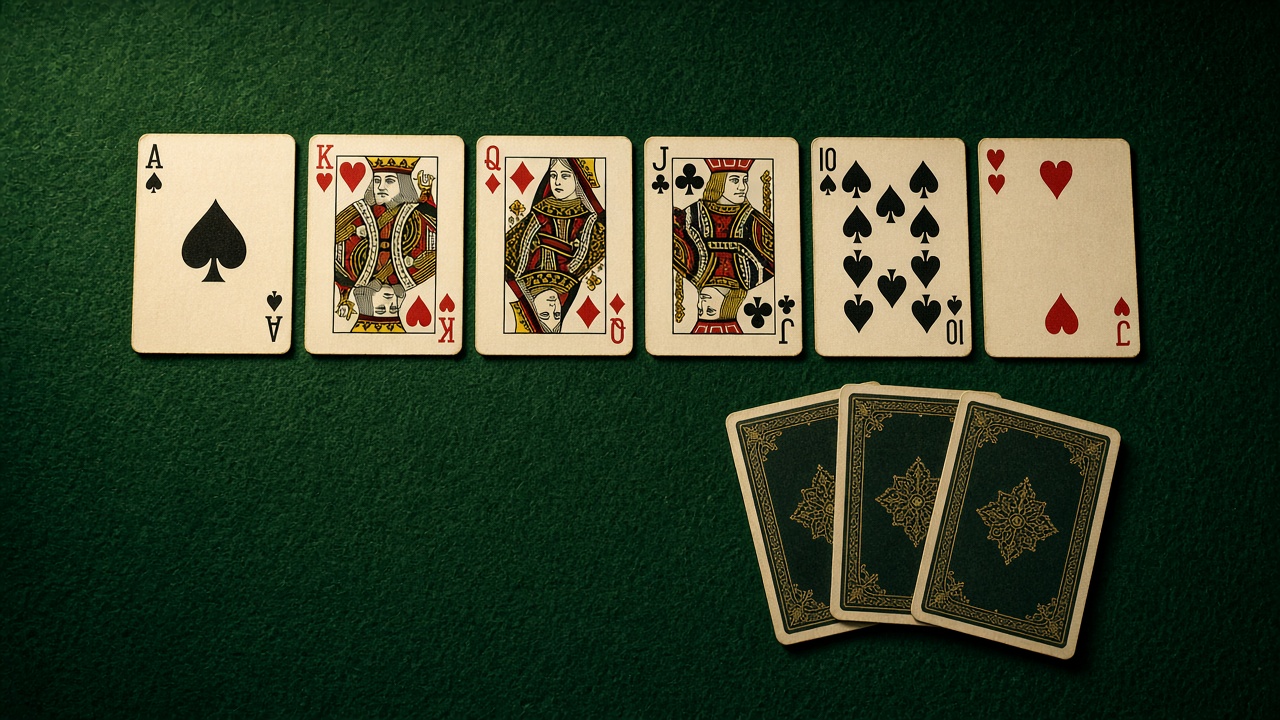
You sort a hand the way you sort a poker fan: best face on the left, then the next, then the last. It feels like you have ranked the hand. You have ranked three faces. Teen patti card ranking of that kind will not tell you whether those three are a run, a colour, or nothing. People also search teen patti cards ranking and mean this face order. They often needed the other ladder. Both are real. They answer different questions.
Say the faces in order once and then use the plurals. The line is ace, then king, then queen, then jack, then the numerical cards from ten down to two. Suits do not insert themselves into that line. A top face of spades and a top face of hearts are the same face. This page is an independent guide. It cannot return chips or reset a password. The tile outranks it.
Teen patti card ranking of a lone face is dull on purpose. Higher beats lower when you are already inside the same category and you need a kicker. Tens beat nines. Nines beat eights. Twos lose to everything above them, except when the two sits inside A-2-3 and the whole holding is a run. In that run the top face is low. Outside it, the top face is high. Memorise the exception as a holding, not as a new personality for one face.
Use that line when two colours share a top face and you need the next one. Kings, jacks, sevens of hearts beat kings, jacks, fives of clubs. The sevens did the work. The hearts did not. Use it when two unmatched hands share a top face. Queens, nines, fours beat queens, nines, threes. The teen patti hand order is not this list. The teen patti hand order is six categories. Confusing the two is how a pair of twos gets called "low" and then loses a pot it should have won against colour? No. A pair of twos beats unmatched aces. The faces inside the unmatched hand are gorgeous. The category is worse.
Wait, say that cleanly, because it is the whole point of a separate teen patti card ranking. Unmatched aces, kings, queens lose to twos, twos, and a three. The face line would have screamed that aces win. The category line says three of a kind, even twos, beats nothing matched, even aces. You need both lines, and you need to know which question you asked.
From strongest to weakest: three of a kind, same-suit run, mixed run, colour, pair, unmatched. Three aces are the best three of a kind. A same-suit A-2-3 is a run with the top face low, and it still loses to three deuces. A mixed run beats colour. That is the reverse of the poker habit, where a flush beats a straight. Teen patti card ranking of faces will not rescue a colour against a run. Nine, eight, seven of mixed suits beat kings, jacks, sevens of one suit. The nines are "worse faces". The category is better.
The six categories are written out with one example each. The roof is three aces, which is a category fact, not a fact about a single face being magical in every holding. The tie page is what you open when the categories match and the faces match too. Suits still do not finish that job.
Boot is the opening stake, equal from everyone who wants a hand. Seen play is usually double the blind price. Looking does not reorder faces and it does not reorder categories. Pack is fold. Show is the comparison when two remain. A side show is private and only between seen players. Teen patti card ranking does not change because you stayed face down. You simply paid less to hold whatever the faces already were.
Four players. Boot of 2. You look and find kings, kings, and a four. You are seen. The price doubled. Ask the face question: the four is a poor spare. Ask the category question: you hold a pair, which beats unmatched faces and loses to colour, to any run, and to three of a kind. You call one player who shows queens, tens, and a six, nothing matched. Your pair wins. The face line would have noted that queens and tens are respectable. The category line cashed the pair. Teen patti card ranking, used alone, would have made you nervous for no reason.
Second deal. You hold queens, jacks, and a nine, mixed suits. That is a run. It beats colour. It loses to a same-suit run and to any three of a kind. The nine is the bottom of the run, not a reason to pack if the price is still the boot. Third deal. A-2-3 of clubs. Same-suit run, top face low. Do not call it three of a kind. Do not call it the best run. Four, five, six of mixed suits is a higher run. Teen patti card ranking of the top face, applied blindly, calls it the best object on the table. Inside this holding it is the low end of a run.
If you can say those three deals without peeking, you have both ladders. If you can only sort faces left to right, you have one ladder and a habit that will pay colour against a run. Deal ten more from a physical deck. Name the category first. Then, only if the category ties, name the faces. That order is the skill.
Neither ladder returns a stake. Teen patti card ranking is not a cashier, and the six categories are not one either. This site cannot see a balance or reset a secret. Eighteen is the line for real cash. A clearer memory of faces is not permission to borrow someone's number and sit. Muflis reverses which category wins. AK47 promotes some ranks so the face line itself is edited. Read the tile. A classic explanation dies on a tile that posted an exception.
Old builds can miss a server. Public notes mention a smaller package, a grouped lobby, and quicker queues, without a version number. None of that sorts your hand. Set a stop number before the boot. When it is gone, stop, even if the last hand was a pair you can finally name. Naming it was the win you came for. The middle is optional.
One more pass, because the mix-up is stubborn. Teen patti card ranking answers "which face is higher?" The six categories answer "which shape wins?" A-2-3 is the place the first answer bends. Everywhere else the top face is high, twos are low, and suits are quiet. Shape first. Faces second. Felt last, if it printed a house card that outranks this page. Keep both lines, because a teen patti card ranking used as a winner's list will cash the wrong hand. Write the six categories on paper once. Then a teen patti card ranking of kickers only, and only after the shapes match.
Outside A-2-3, yes. Inside that run, it plays low. The holding is a same-suit run, not three of a kind.
No. Unmatched aces lose to a pair of twos. Category first. Faces only inside a category.
No. A spade and a heart of the same face are the same face. Classic ties do not move on from there into suits.
On the hand rankings page. This page is the face line, plus the warning not to use it as the shape line.
If you mean a kicker, use the face line. If you mean the winner, use the six categories. If you mean A-2-3, use the exception and then come back to categories. The felt, if it has posted something else, is the last word.
Keep the teen patti cards ranking beside the six-category list. One answers "which face," and the other answers "which shape."
18+ only where the table is real-cash. This guide does not operate the game or return chips.
The six categories are written out with one example each.
Read the noteThe roof is three aces, which is a category fact, not a fact about a single face being magical in every holding.
Read the note