Teen patti joker
Read the teen patti joker page before you play that helper as two cards.
Read the noteTeen patti variations keep three cards and change what those cards are for. A wild can complete a hand. A flipped room pays the weak shape. A numbered room chases a target the classic shelves do not use. Real-cash play is 18+.
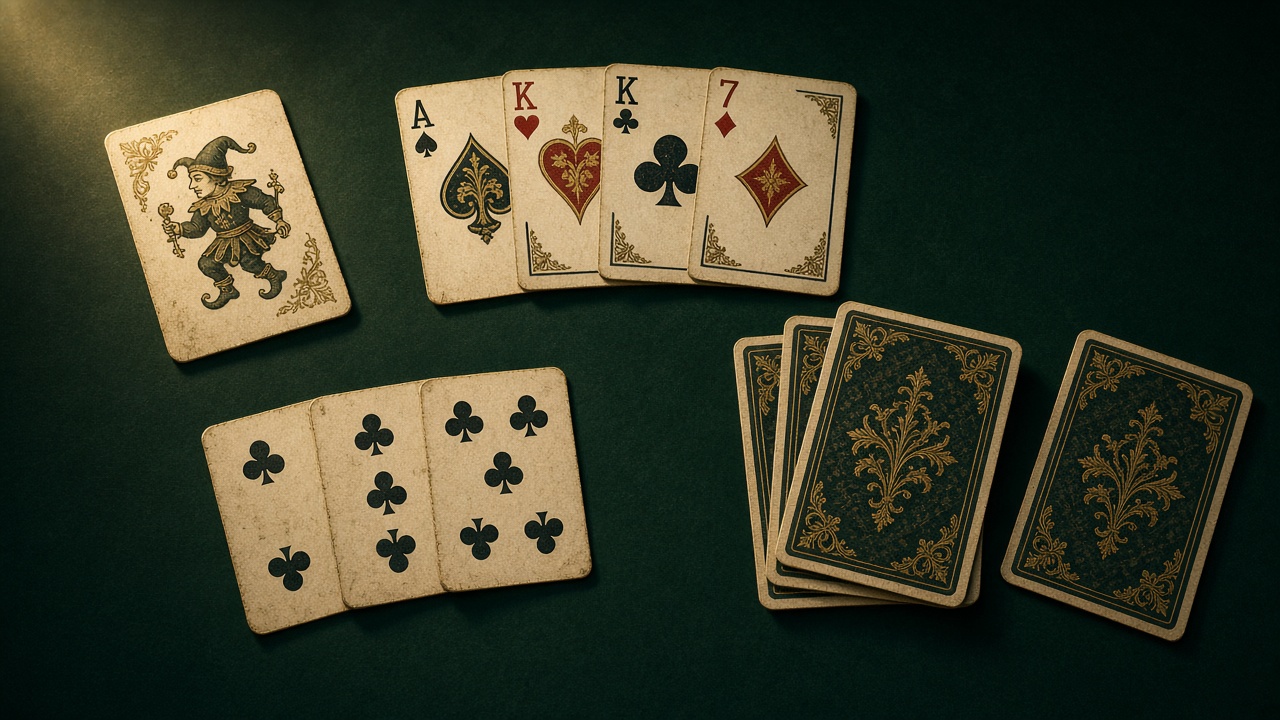
Three aces hit the felt and the room went quiet for the wrong reason. The title above the table was not the classic game. You lose the middle on teen patti variations when you recognise the cards and ignore the title. This is an independent survey, not the app publisher and not a casino. It cannot reset a password or return chips. If a line here disagrees with the tile you joined, the tile wins.
Treat teen patti variations with a substitute rank as the classic shelves plus a helper. The helper stands in for a rank you are missing. It does not deal you a second deck, and it does not let one card be two ranks at once in a way the tile did not print. A printed extra is the first of the teen patti variations most family tables add. You might also see a rank drawn at the start of the hand, and every card of that rank behaves as the helper for that hand only.
AK47 teen patti lets aces, kings, fours, and sevens stand in for a rank you need. Hold the four of hearts, the seven of spades, and the nine of clubs. Those two helpers can both become nines, which is three nines. They can also become eight and ten beside the nine, which is a run. You claim the stronger reading the tile allows. You do not claim both readings in one comparison. A seven is not a seven and a queen in the same breath.
The same discipline applies to a printed helper. King, king, and the extra card can be three kings. King, queen, and the extra can be a run if you name the jack. The extra does not also remain a king while it plays the jack. One job per card. Players who "have everything" are usually describing two hands and hoping the table will not make them pick.
Some teen patti variations flip who is happy to see three aces. Muflis teen patti pays the worst classic shape. Three aces are the shape you wanted on the parent ladder, so they are the shape you dread here. A mixed two-three-five, not in a row and not one suit, is a common strong result because it is weak in the ordinary order. A colour is dangerous. A run is worse. Three of a kind is the result that empties you. Tables still post the exact qualifier for "low enough". Read that line. A general page cannot guess the cutoff your room wrote on the felt.
Other teen patti variations stop using shelves and chase a number. One common version gives ace the value one, counts two through nine as their faces, and counts tens and court cards as zero. You add the three values and keep the last digit. Closer to nine is better, if that is what the tile says. Another version ignores pips and arranges the three ranks as a three-digit number, then asks whose arrangement sits closer to the posted target. Those are different games wearing a similar nickname. Do not explain one of them to a table that posted the other. The buttons, or the house card, are the rulebook for that seat.
A fourth card is still teen patti variations territory, and you still show three. Suppose you are handed ace of spades, king of hearts, king of clubs, and nine of diamonds. You might keep two kings and the ace, or two kings and the nine, and the spare card leaves. There is no fourth card in the comparison. People lose this room by falling in love with all four and then freezing when the button asks which one to drop. Decide the drop before you look at anyone else's face.
The split room is the one that sounds like two games in one middle. You may be asked for a strong three and a weak three, sometimes from a larger set of cards, sometimes with a rule that one hand must qualify. This survey will not invent the qualifier. If the felt says a weak shape must be eight-high or worse, that sentence beats anything you remember from a cousin's house. Play the felt.
Do not carry teen patti variations from the last tile into this one. A helper that was legal at 11 pm is not quietly legal at 11.20 because you liked it. Close the previous hand in your head when the title changes. The label is the index of teen patti variations, not your memory of last night.
What usually stays put is the skeleton, until the tile says it does not. Three cards from a 52-card deck. An equal opening amount before cards move. A higher price after you look, often double. Leaving means your coins stay in the middle. A paid comparison when two remain. Suits still do not break a classic tie unless the house card says they do. Ace is still high except in ace-two-three, except on a tile that moved the ace on purpose. That is a lot of "except". The except is the variation. The skeleton is not a promise that the except will be small.
Practise teen patti variations by saying the tile before you name a hand. Spread three aces. Say the title, then say whether you are glad. Classic: glad. Flipped room: not glad. Helper room: glad, and also aware that someone else's helper may be gladder. Number room: the aces might be ones or faces or digits, and glad is the wrong emotion until you do the arithmetic the tile asked for. Four-card room: you may not even keep all three aces if a fourth card changed the choice. The point of the drill is the pause before the smile.
A friend who already plays the classic game still needs this map. The phrases on the button look cousin-like. The winner does not. Teaching them "it is teen patti with a twist" is how they raise three aces into a flipped room and feel cheated by a rule they did not read. Name the twist in one sentence. Then send them to the page for that twist, not to a blended explanation that makes every tile sound like every other tile.
House nicknames collide. One city calls a flipped game by a name another city uses for a split middle. One app prints a pip total under a title another app uses for a three-digit arrangement. When two write-ups disagree, teen patti variations are not the judge. The tile is. This page is a map of common differences so you know which question to ask. It is not a licence to correct the dealer with a blog.
Real-cash play is 18+ only. Knowing four nicknames is not a system and not a profit. This guide will not offer a mod, unlimited chips, or a bypass of the age check. Set a number you can lose before the first opening amount. When it is gone, stop, even if the next tile is the one you "understand". The balance lives on the operator's account. A clever reading of a helper does not pull coins out of a hand you already folded.
Picture a Thursday with three titles. The first is classic. King, king, seven pleases you, because two kings beat unmatched cards and lose to a colour. You pay the looked price only while that still seems true, and you leave when a run shows up. The second title is flipped. The same king, king, seven is now a problem. You would rather hold two, three, five of mixed suits, the dull shape that loses a classic comparison and wins here. The third title hands you four cards and asks you to drop one. King, king, seven, and a two: you drop the two and keep the kings if the room is classic, and you think much harder if the room is flipped, because the small card may be the one that saves you. The faces did not change. The title changed the job. Write the title on a slip if you forget it after the first win.
If you want the classic shelves with no helper and no flip, leave this map and learn those six names until they are boring. Come back when the title bar is no longer the parent game. Sitting a named room from memory of the parent game is the expensive way to be confident.
They start from it and then leave. A helper keeps the shelves and adds a substitute. A flipped room reverses who wins. A numbered room may ignore the shelves. Read the title before you memorise a hand.
No. They win the classic comparison. They lose a flipped room. In a numbered room they are values or digits, not an automatic celebration. In a four-card room you might not even keep all three.
Each helper takes one job for the hand you declare. Four and seven beside a nine can be three nines, or eight-nine-ten. They cannot be both at the comparison. Name one hand.
No. The operator of the table holds the account. Use the in-app path for a login. Write here only if a sentence about a tile is wrong or out of date.
Learn teen patti variations as labels first. Helper, flip, number, split, extra card. The label tells you which emotion belongs to three aces. The cards come second. A blended memory of all five labels is how you play the wrong game fluently.
If you remember one warning about teen patti variations, do not celebrate three aces until you have read the tile. Then open the page for that tile. This survey is the doorway, not the room.
Open teen patti joker when the tile names a helper. Open AK47 teen patti when aces, kings, fours, and sevens fill holes. Open muflis teen patti when the worst classic holding takes the middle. Each of those pages is the room. This one is only the sign on the door.
18+ only on a real-cash table. Lose only what you already set aside. This guide does not run the game.
Read the teen patti joker page before you play that helper as two cards.
Read the noteAK47 teen patti lets aces, kings, fours, and sevens stand in for a rank you need.
Read the note